Practical4 min readReviewed
Travel insurance basics: what to check before you buy
Travel insurance is one of those things you hope never to use. When you do need it, though, the details of the policy matter enormously. This guide explains what travel insurance usually covers, the questions to ask before you buy, and the small print that catches people out. It's general information, not advice on any particular policy.
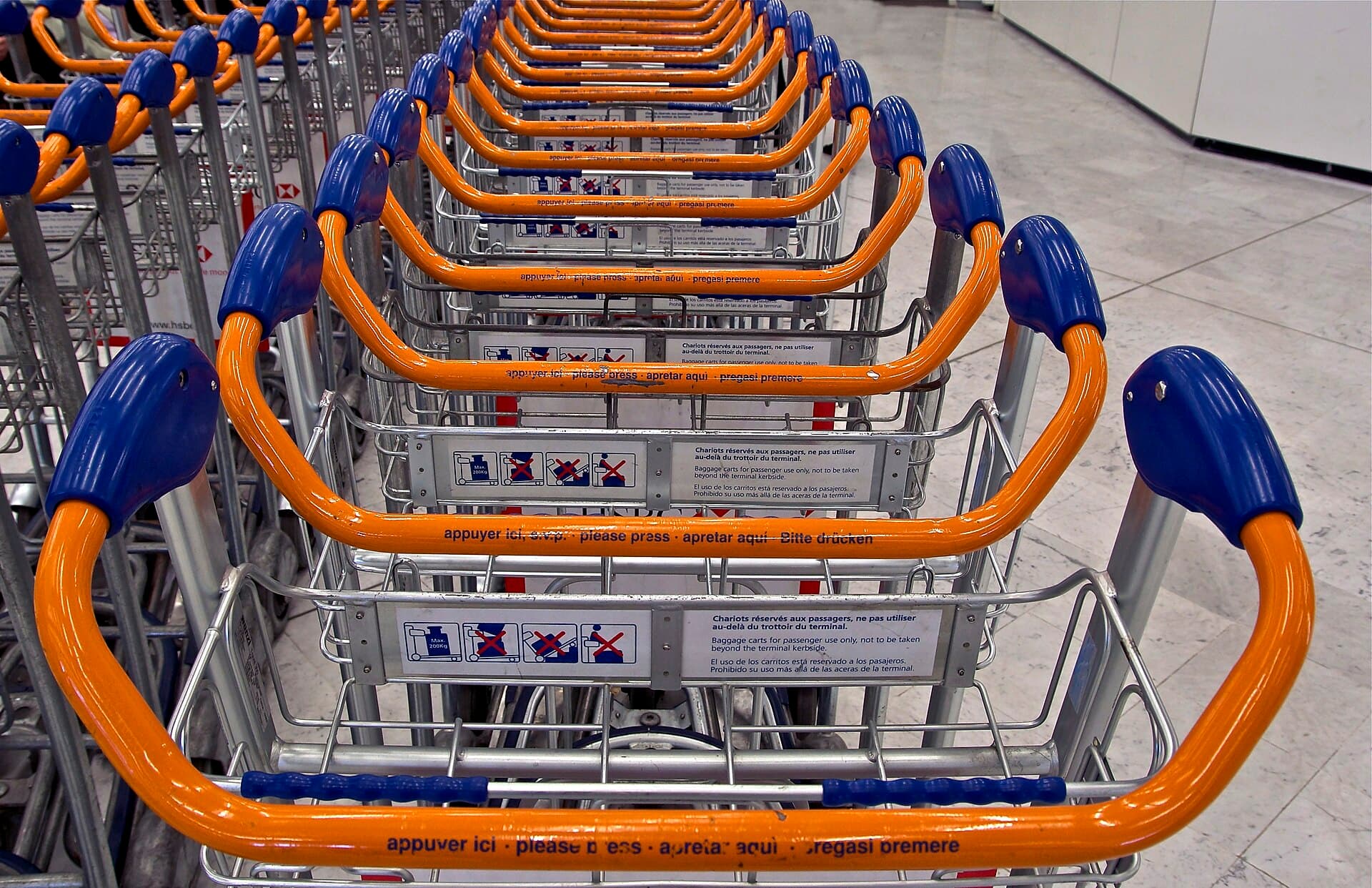
Photo: Luggage trolleys, Paris-Orly Airport by Jebulon, CC0, via Wikimedia Commons (resized and cropped).
Why it's worth thinking about
The biggest reason most people buy travel insurance is medical cover. Healthcare abroad can be very expensive, and getting someone home after a serious illness or injury can cost far more than the trip itself. Governments generally advise travellers to have appropriate insurance in place before they go.
Policies also commonly cover cancelling or cutting short a trip for reasons such as illness, as well as delays, missed departures and lost or stolen belongings. What's included, and how much is paid, varies a lot between policies.
Medical cover and repatriation
Check the amount of medical cover and whether it includes emergency repatriation, meaning bringing you home for treatment. Look for a 24-hour emergency assistance number and keep it with your documents.
Health cards and agreements between countries can help but rarely replace insurance. For example, UK residents can use a Global Health Insurance Card (GHIC) for state healthcare in some countries, but the UK government is clear that it isn't an alternative to travel insurance and doesn't cover things like repatriation.
Pre-existing medical conditions
If you have a medical condition, you'll usually need to declare it when you buy a policy, and insurers may ask detailed questions. Answer them fully and honestly. A claim connected to a condition you didn't declare can be turned down.
Some insurers specialise in cover for people with medical conditions. Comparing a few options is worthwhile, as prices and terms vary widely.
Cancellation and when to buy
Cancellation cover protects the money you've already spent if you can't travel for a covered reason. Because of that, it makes sense to buy a policy soon after booking, so you're covered from the start rather than only from the week you leave.
Read the list of covered reasons carefully. Policies typically cover things like serious illness, but many exclude simply changing your mind, and cover for disruption such as strikes varies.
The small print: excesses, limits and exclusions
Every policy has limits and exclusions, and these are where most disappointments come from. Before buying, look for the key facts or summary document and check the points below.
- The excess: the amount you pay towards each claim
- Single-item limits for valuables such as phones, cameras and laptops
- Activities that need extra cover, such as winter sports or diving
- Exclusions around alcohol, unattended belongings and travel against government advice
- Whether the policy covers all the countries you're visiting
Single-trip or annual policy?
A single-trip policy covers one journey. An annual multi-trip policy covers several trips in a year, usually with a maximum length for each trip. If you travel more than a couple of times a year, an annual policy can be better value, but check the trip-length limit and the regions it covers.
Some bank accounts and credit cards include travel insurance. If yours does, read the terms carefully, as the cover may be more limited than a standalone policy or require you to have paid for the trip with that card.
Making a claim
If something goes wrong, contact the insurer's emergency line as soon as you can, especially for medical problems. Keep receipts, medical reports, police reports for theft, and written confirmation from airlines about delays. Claims go much more smoothly with documentation.
Finally, check official travel advice for your destination before you go, as insurance can be affected if you travel against it. Our travel documents checklist and carry-on packing list help with the rest of your preparation, and our AI trip planner can build the itinerary.
Comparing policies sensibly
Price matters, but the cheapest policy isn't always good value. Compare the medical cover, the excess, the cancellation limit and the exclusions side by side for the trip you're actually taking. A slightly more expensive policy with a lower excess or better cover for your activities can work out cheaper if you ever need to claim.
Comparison websites are a useful starting point, but always read the policy's own summary document before you buy. If something is unclear, ask the insurer and get the answer in writing.
Travelling with family or for longer
Family policies can cover several people at once, but check the definition of family and any age limits for children. For longer trips, such as a gap year or extended travel, look for policies designed for long stays, as standard single-trip and annual policies often limit how long you can be away.
Draft your itinerary in minutes
Our AI trip planner turns your dates, budget and interests into a day-by-day plan you can refine. Check practical details with official sources before you travel.
Frequently asked questions
When should I buy travel insurance?
Ideally soon after you book, so cancellation cover protects you from the start. If you buy just before leaving, you won't be covered for reasons that stop you travelling before then.
Does a GHIC or EHIC replace travel insurance?
No. The UK government says a GHIC or EHIC gives access to state healthcare in some countries but isn't an alternative to travel insurance and won't cover things like repatriation or private treatment.
Do I need to declare medical conditions?
Usually, yes. Insurers ask about pre-existing conditions, and a claim linked to something you didn't declare can be refused. Answer the questions fully, and compare insurers if cover is expensive.
Related articles
- Travel documents checklist: what to check before you goA practical checklist of travel documents and entry requirements to check before an international trip, with links to official sources for the current rules.
- Carry-on packing list: how to travel with just a cabin bagA practical carry-on packing list: what to bring, how to fit it in a cabin bag, liquids and battery rules, and tips for travelling light for a week or more.
- How to plan a trip, step by stepA practical, step-by-step guide to planning a trip: choosing dates and a destination, setting a budget, building an itinerary and preparing documents.
- Will my bag fit under the seat? A guide to personal itemsWill your bag fit under the seat in front of you? How under-seat limits work, which bags fit best, how to measure yours and what to do if it's close.
- Personal item vs carry-on: what's the difference?Personal item or carry-on bag? What each one means, where each goes on the plane, what your fare includes and how to choose the right bag for your trip.
- Lost luggage: what to do when your bag doesn't arriveYour checked bag didn't arrive? What to do before you leave the airport, how to claim for essentials, and what to do if a bag is damaged or lost for good.
- Using your phone abroad: eSIM, roaming or local SIM?How to use your phone abroad without a surprise bill: roaming plans, travel eSIMs and local SIM cards compared, plus simple settings that save data.
- How long must your passport be valid to travel?Why airlines turn away travellers with passports that haven't expired yet: validity rules, blank pages and damage, and how to check before you book.
- How to beat jet lag: before, during and after your flightPractical ways to reduce jet lag: adjusting your sleep before you fly, what to do on the plane, and how daylight and timing help you adapt after you land.
- Flying with kids: a practical guide for familiesA practical guide to flying with children: booking seats together, baby food and security, pushchairs and car seats, documents, and keeping kids happy on board.
- Getting from the airport to the city in Paris, Rome, Tokyo and LisbonHow to get from the airport to the city centre in Paris, Rome, Tokyo and Lisbon: trains, buses and taxis, plus what to check before you land.
- Dummy ticket and flight itinerary for a visa: what is acceptedWhat a dummy ticket or flight itinerary for a visa really is, what to submit with your application, the safe and legal options and how to check a booking.
- Proof of onward travel: what it is and how to show itWhy airlines and border officers ask for proof of onward travel, who gets asked, what usually counts, and the honest options if you have a one-way ticket.
Ready-made itineraries
Destination guides
- Japan travel guidePlan a trip to Japan: the best season to visit, how many days you need, a classic Tokyo–Kyoto–Osaka route, rail travel and practical first-timer tips.
- Italy travel guidePlan a trip to Italy: the best time to visit, how many days you need, classic routes between Rome, Florence and Venice, train travel and practical tips.
Official sources and further reading
Practical details such as entry requirements, prices, timetables and opening days change. Always confirm them with the official sources below before you travel. Last reviewed by the AIFlyTrip editorial team on .
- Foreign travel insurance (GOV.UK)
- Global Health Insurance Card (GHIC) (GOV.UK)
- Foreign travel advice (UK Foreign, Commonwealth & Development Office)