Practical4 min readReviewed
Flying with kids: a practical guide for families
Flying with children takes more planning than flying alone, but most of the stress comes from a handful of predictable things: seats, bags, security and keeping everyone fed and occupied. Sort those out in advance and the journey becomes far more manageable. Here's how.
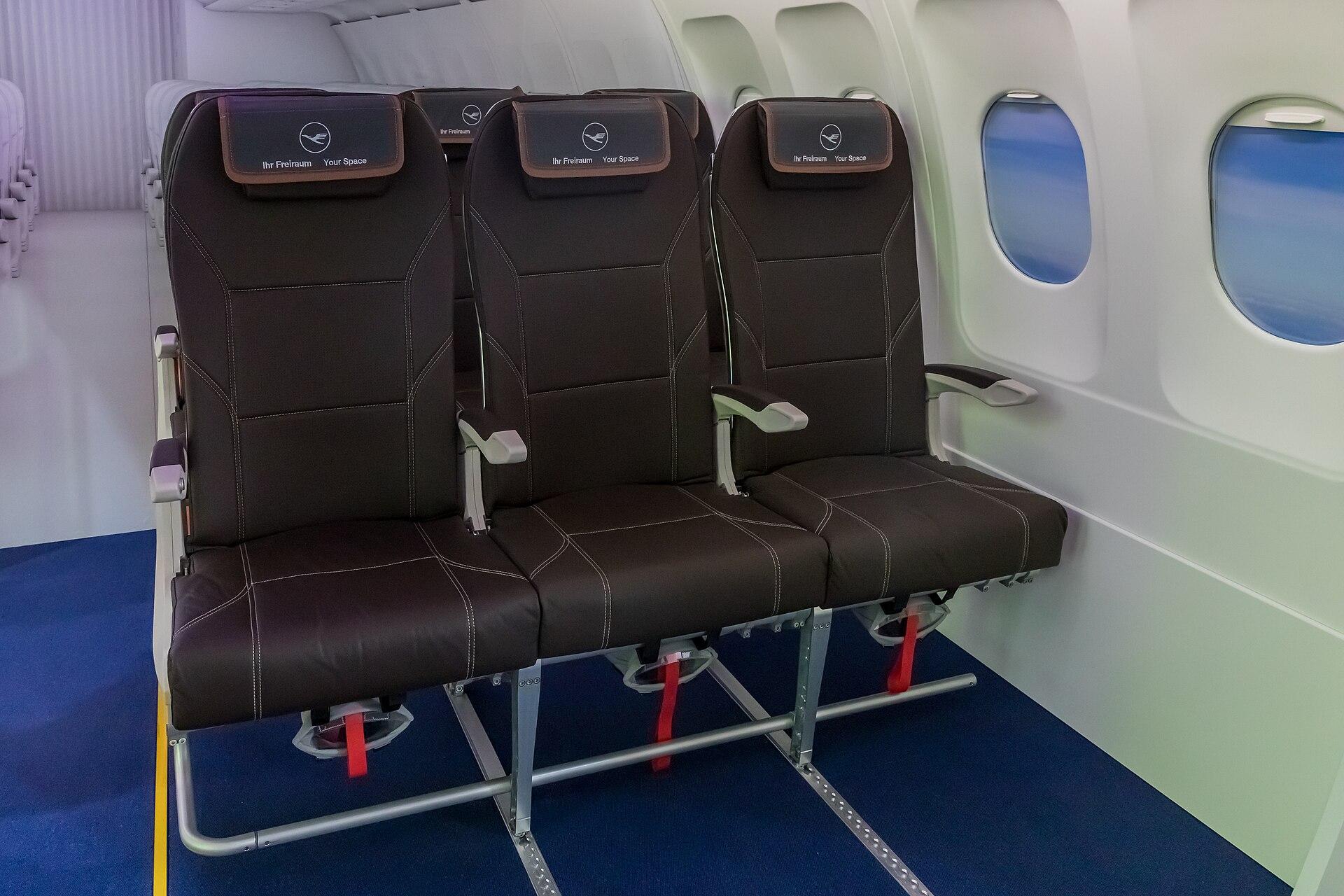
Photo: Aircraft cabin seats by Matti Blume, CC BY-SA 4.0, via Wikimedia Commons (resized and cropped).
Booking: seats, bassinets and timing
When you book, check how the airline seats families. Some seat young children next to an adult automatically; on others, choosing seats together costs extra. If sitting together matters, it's worth comparing a fare that includes seat selection; our guide to budget airline fees explains what to look for.
Babies under two often travel on a parent's lap, usually at a reduced fare. On long-haul flights, many airlines offer bassinets that attach to the wall in front of certain seats. They're limited and have size and weight limits, so request one early and confirm it before you fly.
Think about timing too. Flights that line up with nap time or bedtime can be easier with young children, while very early starts can make a long day longer.
Bags, pushchairs and car seats
Check your airline's baggage rules for children. Many allow a pushchair and a car seat free of charge, and pushchairs can often be used up to the aircraft door and returned at the gate or at baggage reclaim. Rules vary, so confirm them before you pack.
If you want your child to sit in their own car seat on board, you'll usually need to buy them a seat and use an approved model. Check with the airline before you travel, as policies on which seats are accepted differ.
Security with children
Airport security has special allowances for families. In many countries, baby food, formula and milk for a child are allowed in hand luggage in reasonable quantities beyond the usual liquids limit, though they may be checked separately. The official guidance for the US and the UK is linked below.
Pack these items so they're easy to take out, and allow extra time at security. Children usually walk through the scanner, and you may need to fold pushchairs and send them through the X-ray machine.
Documents for children
Children generally need their own passport for international travel, and some destinations require visas or travel authorisations for children too. Check entry requirements for every traveller with official sources well before you go; our travel documents checklist covers the basics.
If you're travelling with a child without the other parent, or if you have a different surname from your child, you may be asked for evidence of permission or your relationship. GOV.UK has guidance for UK travellers, and other countries publish similar advice.
On board: food, comfort and entertainment
Bring more snacks and drinks than you think you'll need, plus a change of clothes for each child and a spare top for yourself. Pack a small bag with essentials that stays at your feet, so you're not getting up to reach the overhead locker.
Changes in cabin pressure during take-off and landing can be uncomfortable for small ears. Feeding a baby or giving older children a drink or something to chew during these moments can help. New, small toys, downloaded films and headphones that fit children's ears are worth their weight in gold on longer flights.
- Snacks, drinks and any baby food or milk
- A change of clothes for each child, and a spare top for you
- Wipes, nappies or pull-ups, and a few plastic bags
- Downloaded entertainment and child-sized headphones
- A favourite comforter for sleep
At the airport
Give yourself plenty of time. Everything takes longer with children, from check-in to bathroom stops. Many airports have family security lanes, play areas and baby-changing rooms; check the airport's website so you know where they are.
If you have a connection, choose a comfortable layover rather than the shortest possible one. Our guide on how much layover time you need explains how to judge it.
Planning the trip around the flight
Keep the first day after a long flight gentle, and plan days around naps and meal times rather than a packed list of sights. Choosing accommodation close to the places you'll visit cuts travel time with tired children.
Our AI trip planner can build a relaxed, family-paced itinerary if you set the pace to relaxed and mention children in your notes, and our itineraries give you a starting point for popular cities.
Draft your itinerary in minutes
Our AI trip planner turns your dates, budget and interests into a day-by-day plan you can refine. Check practical details with official sources before you travel.
Frequently asked questions
Can I take baby milk and food through airport security?
In many countries, yes: baby food, formula and milk for a child are allowed in reasonable quantities beyond the normal liquids limit, though they may be checked. Confirm the current rules for your departure airport.
Does my baby need their own seat?
Usually not. Babies under two can typically travel on a parent's lap. If you want them in their own car seat, you'll normally need to buy a seat and use an airline-approved car seat.
Can I take a pushchair to the plane?
Many airlines let you use a pushchair up to the aircraft door and return it at the gate or baggage reclaim, often free of charge. Policies and size limits vary, so check with your airline.
Related articles
- Travel documents checklist: what to check before you goA practical checklist of travel documents and entry requirements to check before an international trip, with links to official sources for the current rules.
- Budget airline fees explainedA clear guide to budget airline fees: cabin bags, checked luggage, seats, check-in, payment and change fees, and how to compare the real price of a fare.
- Carry-on packing list: how to travel with just a cabin bagA practical carry-on packing list: what to bring, how to fit it in a cabin bag, liquids and battery rules, and tips for travelling light for a week or more.
- Will my bag fit under the seat? A guide to personal itemsWill your bag fit under the seat in front of you? How under-seat limits work, which bags fit best, how to measure yours and what to do if it's close.
- Personal item vs carry-on: what's the difference?Personal item or carry-on bag? What each one means, where each goes on the plane, what your fare includes and how to choose the right bag for your trip.
- Lost luggage: what to do when your bag doesn't arriveYour checked bag didn't arrive? What to do before you leave the airport, how to claim for essentials, and what to do if a bag is damaged or lost for good.
- Using your phone abroad: eSIM, roaming or local SIM?How to use your phone abroad without a surprise bill: roaming plans, travel eSIMs and local SIM cards compared, plus simple settings that save data.
- How long must your passport be valid to travel?Why airlines turn away travellers with passports that haven't expired yet: validity rules, blank pages and damage, and how to check before you book.
- How to beat jet lag: before, during and after your flightPractical ways to reduce jet lag: adjusting your sleep before you fly, what to do on the plane, and how daylight and timing help you adapt after you land.
- Getting from the airport to the city in Paris, Rome, Tokyo and LisbonHow to get from the airport to the city centre in Paris, Rome, Tokyo and Lisbon: trains, buses and taxis, plus what to check before you land.
- Travel insurance basics: what to check before you buyA plain-English guide to travel insurance: medical cover, cancellation, pre-existing conditions, excesses and exclusions, and when to buy a policy.
- Dummy ticket and flight itinerary for a visa: what is acceptedWhat a dummy ticket or flight itinerary for a visa really is, what to submit with your application, the safe and legal options and how to check a booking.
- Proof of onward travel: what it is and how to show itWhy airlines and border officers ask for proof of onward travel, who gets asked, what usually counts, and the honest options if you have a one-way ticket.
Ready-made itineraries
- Lisbon in 3 daysA three-day Lisbon itinerary covering Alfama, Baixa, Chiado and Belém, plus a day trip to Sintra, with tips for the hills, trams and timing.
- Paris in 3 daysA realistic three-day Paris itinerary for first-time visitors, grouped by neighbourhood, with museum timing tips and ideas to adapt it to your pace.
Destination guides
- Lisbon travel guidePlan your Lisbon trip: which neighbourhoods to explore, how many days to spend, when to visit, trams and transport cards, and day trips to Sintra and Cascais.
- Paris travel guidePlan your Paris trip: which neighbourhoods to explore, how many days to spend, when to visit, getting around by metro and practical tips for first-timers.
Official sources and further reading
Practical details such as entry requirements, prices, timetables and opening days change. Always confirm them with the official sources below before you travel. Last reviewed by the AIFlyTrip editorial team on .
- Traveling with children (security screening) (U.S. Transportation Security Administration)
- Hand luggage restrictions at UK airports (GOV.UK)
- Taking your child abroad (GOV.UK)
- Baggage: advice for passengers (UK Civil Aviation Authority)