Flights5 min readReviewed
How airline pricing works, and why flight prices keep changing
Two people on the same flight have often paid very different amounts, and a fare you saw this morning can be gone by the afternoon. It can feel random, but it follows a system. This guide explains in plain terms how airlines price seats, why the number moves, and how to use that knowledge when you book.
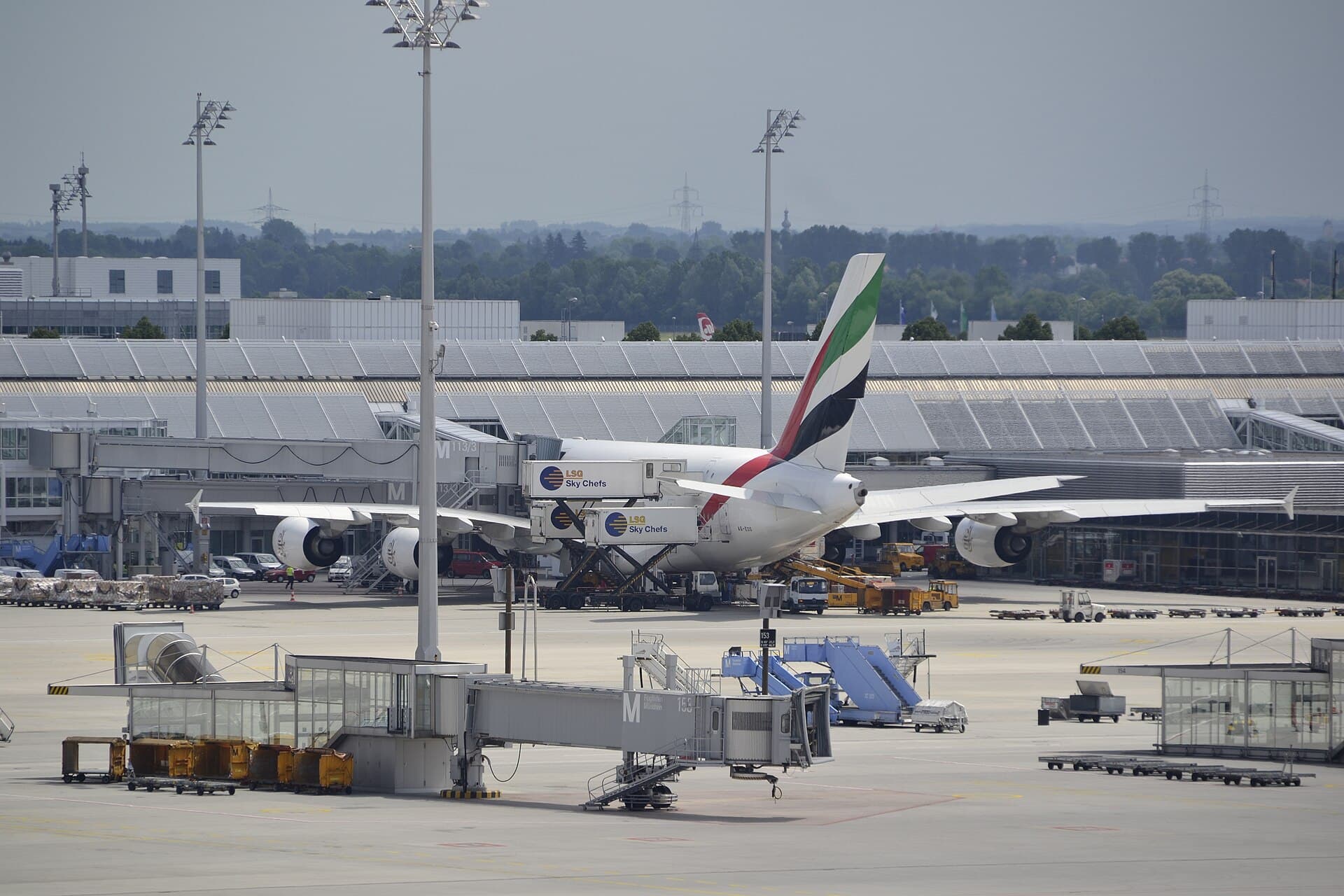
Photo: Aircraft at Munich Airport by High Contrast, CC BY 3.0 de, via Wikimedia Commons (resized and cropped).
One cabin, many prices
An airline does not set a single price for economy on a flight. It divides the seats into groups, often called fare classes or fare buckets, each with its own price and its own rules. The cheapest group might allow no changes and no checked bag, while a more expensive one in the same cabin can be changed or refunded.
Each group has a limited number of seats on sale. When the cheapest group sells out, the next one becomes the lowest price available, so the fare steps up even though nothing about the flight has changed. This is the main reason prices jump rather than drift.
Demand decides how many cheap seats exist
Airlines forecast how full each flight will be, using how past flights on that route sold and how bookings are going this time. If a flight is filling faster than expected, fewer seats are offered at the lower prices. If it is selling slowly, cheaper seats can be opened up again, which is why fares sometimes fall as well as rise.
Demand follows patterns you can predict. School holidays, public holidays, big events and popular days of the week all push fares up. Early morning, late night and midweek flights are often less popular, and therefore often cheaper. Our cheap flight tips list practical ways to use this.
Competition and the route itself
The same distance can cost very different amounts on different routes. Where several airlines compete, especially if a low-cost airline is one of them, fares tend to be lower. Where one airline has the route to itself, it has less reason to discount.
This is also why a journey with a connection is sometimes cheaper than the direct flight, even though it uses two planes. The airline with the connection is competing for your booking against the direct flight, and price is how it wins. Comparing nearby airports works for the same reason, as our guide on how to find cheap flights explains.
Timing: booking early and booking late
As a general pattern, the cheapest groups of seats sell first, and people who book close to departure are more often travelling for work or in an emergency and will pay more. So fares usually climb in the final weeks before a flight.
Booking very early is not always cheapest either, because airlines may not release their lowest prices until they can see how a flight is selling. There is no single best day or number of weeks that holds for every route, and any figure you read is an average at best. A more reliable habit is to start watching prices early, set a price alert, and book when the fare is good for your dates rather than waiting for a perfect one.
What the price is made of
The amount you pay is the airline's fare plus taxes, airport charges and any surcharges the airline adds. The taxes and airport charges depend on the airports and countries involved, so two fares that look similar can be built very differently.
Rules in several places are designed to stop the headline price from misleading you. In the European Union, the price shown must include all unavoidable taxes, charges and fees from the start, and optional extras have to be something you choose to add. In the United States, advertised fares must likewise include taxes and mandatory fees. Extras such as bags and seats still sit on top, and our guide to budget airline fees explains how to add them up.
Why a price changes while you are searching
A fare that changes between two searches, or between the results page and the payment page, usually has an ordinary explanation.
Many people believe that airlines raise the price because you searched before. There is little evidence for this, and the reasons below explain most cases. If you want to rule it out, compare in a private browser window, which costs nothing.
- The last seat in a cheap group was sold to someone else
- A comparison site showed a stored price that was already out of date
- You searched for several passengers: if only one cheap seat is left, everyone is quoted the higher price, so try searching for one traveller to see the difference
- The price was shown in another currency and the exchange rate moved
- A booking site added its own fee at the payment step
What this means when you book
Because price follows demand and fare rules, the most useful things you can change are your dates, your airports and the fare type you choose. Check a few days either side of your preferred dates, compare the total with the bags you need, and read the change and refund rules before you pay for the cheapest option.
When you have a fare in mind, put it into our free trip budget calculator with accommodation and daily spending to see the whole trip, or let the AI trip planner draft a plan with flight options and a budget estimate for your dates.
- Be flexible on dates and times before anything else
- Compare the full price, including bags and seats
- Check the fare rules, not only the fare
- Set a price alert instead of checking repeatedly
- Book when the price is good for your dates
Draft your itinerary in minutes
Our AI trip planner turns your dates, budget and interests into a day-by-day plan you can refine. Check practical details with official sources before you travel.
Frequently asked questions
Why did my flight price go up overnight?
Most often the cheapest group of seats sold out, so the next, more expensive group became the lowest price on sale. Demand forecasts are also updated regularly, which can reduce the number of seats offered at lower prices.
Do flight prices go up the more you search?
There is little evidence that airlines raise fares because you searched before. Price changes are usually explained by cheap seats selling out or by a comparison site showing an out-of-date price. Comparing in a private window is a simple way to check.
Is there a best day to book flights?
No single day is reliably cheapest for every route. The day you fly matters more than the day you book, with midweek and off-peak flights often costing less. Watching prices with an alert is more dependable than waiting for a particular weekday.
Why is a return flight sometimes cheaper than a one-way?
Some airlines, especially on long-haul routes, price return fares to attract leisure travellers and charge more for one-way tickets, which are more often bought by people with less flexibility. Low-cost airlines usually price each direction separately instead.
Related articles
- How to find cheap flights: a step-by-step methodA practical method for finding cheaper flights: flexible dates, nearby airports, fare types, the true total cost, price alerts and when to book direct.
- Cheap flight tips: 12 practical ways to saveTwelve practical ways to pay less for flights, from travelling off-peak and packing light to open-jaw routes, price alerts and the risky tricks to avoid.
- Budget airline fees explainedA clear guide to budget airline fees: cabin bags, checked luggage, seats, check-in, payment and change fees, and how to compare the real price of a fare.
- What is a flight itinerary? A plain guide with an exampleWhat a flight itinerary is, how it differs from an e-ticket and a boarding pass, how to read one line by line, a sample to compare with and how to get yours.
Destination guides
- Italy travel guidePlan a trip to Italy: the best time to visit, how many days you need, classic routes between Rome, Florence and Venice, train travel and practical tips.
- Japan travel guidePlan a trip to Japan: the best season to visit, how many days you need, a classic Tokyo–Kyoto–Osaka route, rail travel and practical first-timer tips.
Official sources and further reading
Practical details such as entry requirements, prices, timetables and opening days change. Always confirm them with the official sources below before you travel. Last reviewed by the AIFlyTrip editorial team on .
- Regulation (EC) No 1008/2008, including air fare price transparency (EUR-Lex (Official Journal of the EU))
- Aviation consumer protection (U.S. Department of Transportation)
- Your holiday booking: advice for passengers (UK Civil Aviation Authority)